AI-Driven Transport Optimisation in Focus - TRANSLOG Connect 2025
.
AI-Driven Transport Optimisation in Focus
Insights from S2data at TRANSLOG Connect 2025
TRANSLOG Connect 2025, held in Budapest, once again brought together Central and Eastern Europe’s logistics and supply chain leaders to address the realities shaping the industry - from digital transformation and AI-driven optimisation to resilience, regulatory complexity, and sustainable performance. As the region’s leading cross-industrial B2B meeting platform, the congress is known for its pre-scheduled one-to-one meeting format and highly focused agenda, creating an environment where strategic priorities meet practical implementation.
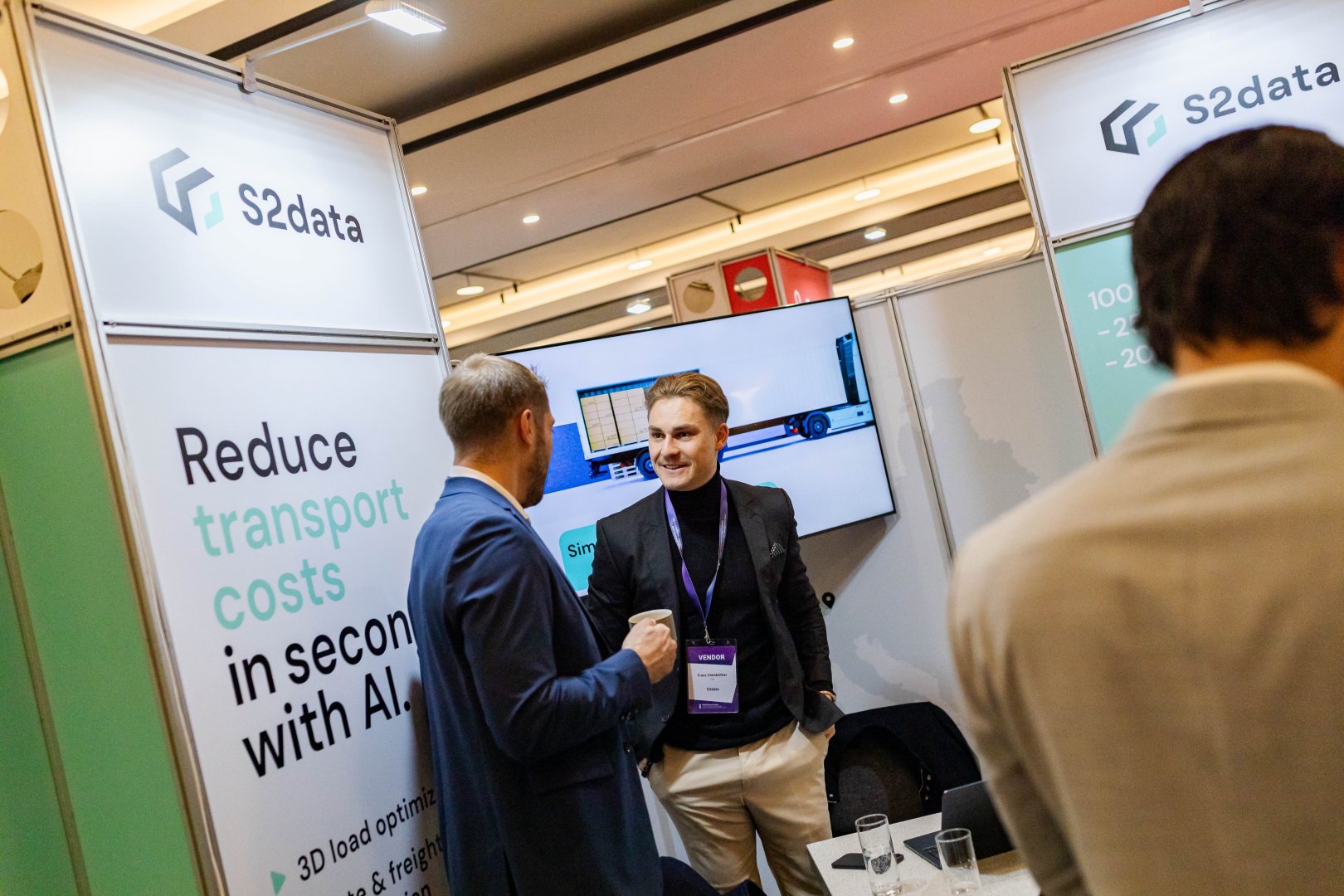
Among the key themes of the programme was the growing role of artificial intelligence in transport planning and network optimisation. In this context, Dr. Alexandra Karacs, journalist at NewTechnology Magazine spoke with the representative of S2data, a technology-driven provider specialising in AI-supported supply chain planning and mathematically based transport optimisation.
The discussion explored how advanced analytics, 3D load planning, automated route and rate selection, and real-time decision support are transforming operational logistics - not as abstract innovation, but as measurable business impact. The interview also highlighted that AI-driven optimisation delivers the strongest measurable impact in transport planning, network simulation, and early-warning systems. Particularly for companies previously reliant on manual or spreadsheet-based planning, the shift to algorithm-supported decision-making unlocks significant efficiency potential.
.
 To begin, could you briefly introduce S2data and outline the core value your solutions bring to logistics and transport optimisation?
Thomas Jellenz-Hartmann "S2data specializes in innovative supply chain planning and optimization, offering solutions that are not only efficient but also quick and easy to integrate and use. The proprietary SaaS solution significantly reduces logistics costs and emissions while providing improved visibility and efficiency across the entire supply chain. The company focuses on optimizing logistics processes through mathematically based 3D load planning and automated selection of ideal routes and transport rates."
.
From your perspective, what major trends are currently shaping AI adoption in logistics - both globally and within the Central and Eastern European region? How do you see local developments comparing to global progress?
Thomas Jellenz-Hartmann "The introduction of AI in logistics is currently being shaped globally by several overarching developments. First, the importance of end-to-end digitalization along the entire supply chain is increasing, as AI can only reach its full potential when sufficient data is available and system integration is in place. At the same time, the use of autonomous and semi-autonomous systems is advancing rapidly, especially in North America and Asia, particularly in the areas of automated warehouses, robot-assisted picking, and, in the long term, autonomous transport solutions. At the same time, the issue of resilience is becoming increasingly important, as companies use AI-based forecasts and simulations to identify disruptions early on and dynamically adapt networks.
The global shortage of skilled workers is further exacerbating this trend, as AI-based assistance and automation solutions can reduce the operational workload. The picture in Central and Eastern Europe is more mixed: while the region lags somewhat behind the global leaders in highly automated areas such as autonomous fleets, it is catching up quickly in analytical AI applications, particularly in transport, network, and warehouse optimization.
The strong industrial structure, the high density of automotive and manufacturing clusters, and the central role in the European transport network offer considerable potential for efficiency gains. At the same time, heterogeneous IT landscapes and a certain regulatory-driven reluctance to invest are slowing down the rollout in some cases. Nevertheless, CEE is developing dynamically and is likely to gain significantly in importance in the area of AI-supported planning and optimization systems in the coming years."
.
What are the key advantages that AI-driven optimisation can offer today, and in which areas do you see the strongest measurable benefits for logistics operators?
Thomas Jellenz-Hartmann "AI-driven optimization has been proven to lead to significant efficiency gains in transport and supply chain logistics, particularly in the areas of costs, service levels, and sustainability. In transport planning, AI enables a systematic reduction in empty kilometers, significantly better utilization of cargo space, tonnage, and axle load, and much more consistent adherence to time windows and driving restrictions. This noticeably reduces operating costs while simultaneously increasing service quality.
AI also delivers considerable added value in network planning, as companies can simulate and adjust location structures, route network designs, or cut-off times much more quickly and on a data-driven basis. In addition, AI-based early warning systems help to increase resilience by identifying changes in demand, capacity bottlenecks, or disruptions at an early stage. CO₂ optimization is also an increasingly important factor, as AI can simultaneously balance ecological and economic targets, thereby positively influencing both the cost structure and ESG performance.
The effects are particularly pronounced in companies that have previously relied predominantly on manual or Excel-based planning and therefore have particularly high potential for automation and optimization."
.
Every technological shift brings its own challenges. What risks, limitations, or operational hurdles should companies be aware of when implementing AI in transport planning and supply chain decision-making?
Thomas Jellenz-Hartmann "In addition to considerable potential, the implementation of AI also brings with it specific challenges. A key limiting factor is data quality: incomplete or inconsistent master data, missing geocoding, or insufficiently integrated system landscapes can significantly impair the performance of optimization models and reduce acceptance in operations.
The organizational dimension also plays an important role, as dispatchers and supply chain planners need to be able to understand the decision-making logic behind AI-based suggestions in order to develop trust. That is why a transparent human-in-the-loop approach is crucial, positioning AI as an assistance system rather than a black box. In addition, technical integration into existing ERP, TMS, and WMS systems can be complex, as interfaces, authorization models, and process flows must be harmonized. Added to this is a growing regulatory framework, particularly through the EU AI Act, which imposes requirements on documentation, auditability, data governance, and human oversight.
Companies must also take into account that AI models are only as robust as the data used to train them and feed them during operation. Continuous monitoring, regular model updates, and structured exception management are therefore essential to ensure stability and operational reliability."
.
To what extent do you feel that the evolving regulatory environment - particularly in the EU - is influencing or accelerating the adoption of AI in logistics?
Thomas Jellenz-Hartmann "The regulatory environment in the EU, in particular the EU AI Act, has a significant impact on the introduction of AI in logistics. The AI Act defines a risk-based approach that sets out comprehensive requirements for transparency, data quality, monitoring, and human control mechanisms for certain AI applications, especially those relevant to critical infrastructure or safety-related decisions.
For logistics companies, this means additional compliance obligations, such as documenting training data, ensuring the traceability of decision-making logic, conducting regular system audits, and adapting contracts with technology providers. While many companies initially perceive these regulatory obligations as a burden, the AI Act creates greater trust in AI-supported systems in the long term and provides clear guidelines for their responsible use. At the same time, the regulations influence investment decisions: companies that invest early in auditable, explainable, and governance-compliant AI systems improve their competitiveness and reduce long-term risks.
Overall, the AI Act will lead to AI solutions in Europe being more oriented toward transparency, documentability, and security, which is particularly important for the logistics sector as a critical component of European infrastructure."
.
Looking ahead, what realistic progress do you expect in the next three to five years? How far can AI take the sector, and what might the future of intelligent, data-driven logistics look like?
Thomas Jellenz-Hartmann "Over the next three to five years, logistics will change less through radical disruption and more through a significant professionalization of planning and decision-making processes. AI-supported transport planning will evolve from static daily schedules to continuously reoptimized processes in which real-time data from telematics, traffic information, production programs, and inventory levels are continuously incorporated into planning. This will result in dynamic control that simultaneously optimizes costs, CO₂ emissions, and service levels. At the same time, integrated planning across previously separate functional areas – such as production, warehousing, and transport – will gain in importance as AI breaks down silo boundaries and enables holistic optimization.
The use of AI assistance systems will also become widespread: dispatchers and warehouse managers are increasingly working with intelligent co-pilots that report anomalies, suggest decision options, and simulate scenarios, while the final decision remains with humans. In addition, CO₂-optimized planning will become standard as regulatory requirements and ESG requirements have a profound impact on operational processes. Digital twins will establish themselves as a strategic tool for risk-free planning of network decisions, service level adjustments, or outsourcing scenarios. In Central and Eastern Europe, a significant surge in professionalization is also expected in dispatching, as many companies migrate from manual processes to AI-based systems."
.
Overall, a logistics landscape is emerging in which AI absorbs operational complexity, enabling companies to manage their operations more precisely, quickly, and sustainably. S2data is positioning itself at the heart of this transformation as a platform that combines economic efficiency and environmental responsibility in a data-driven future of transport logistics.
TRANSLOG Connect continues to serve as a strategic meeting point where forward-looking ideas evolve into actionable strategies, connecting technology providers, logistics operators, and senior decision-makers across the region. The next edition will take place on 25–26 November 2026 in Budapest, once again bringing together supply chain leaders to exchange insights, strengthen partnerships, and address the key challenges shaping the future of logistics in Central and Eastern Europe and beyond.
.
.